
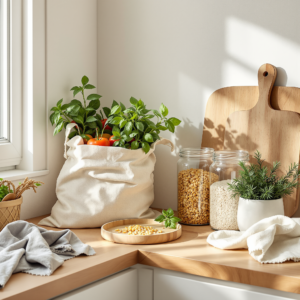
Building a zero waste home is one of those goals that sounds admirable and feels impossible at the same time.
The phrase sets a high bar. Zero. It’s right there in the name, and it can make the whole idea feel like an all-or-nothing commitment that most of us aren’t ready for.
But a zero waste home, in practice, is less about achieving actual zero and more about a direction of travel. It’s about sending less to landfill, buying less that can’t be reused or recycled, and gradually shifting the way you think about the things you bring into your home.
Start in the kitchen
The kitchen generates more household waste than almost anywhere else — food packaging, cling film, single-use bags, disposable paper towels. It’s also where the most straightforward swaps live, which makes it the best place to start your zero waste home journey.
Beeswax wraps instead of cling film. Reusable produce bags for fruit and vegetables. A compost bin for food scraps. A set of good containers that actually gets used. These aren’t dramatic changes — they’re practical ones that quietly reduce how much goes in the bin each week.
Over time, these habits become automatic. You stop reaching for the cling film because it’s just not there anymore.
Then look at what you’re buying
A lot of household waste is packaging. And the most effective way to reduce packaging waste isn’t recycling it — it’s not bringing it home in the first place.
Buying in bulk where possible, choosing products in glass or aluminium over plastic, shopping at markets where things come loose — these habits shift the problem upstream, before it ever reaches your bin.
It takes a bit of adjustment at first. Then it becomes second nature. And the side effect is often a quieter, less cluttered home — because you’re simply buying less.
The bathroom: often overlooked, easy to change
After the kitchen, the bathroom is one of the biggest contributors to household waste — single-use cotton pads, plastic bottles, disposable razors, excessive packaging.
A few swaps go a long way here. Reusable cotton rounds instead of disposable ones. A shampoo bar instead of a plastic bottle. A safety razor that lasts years instead of months. Solid soap in paper packaging instead of liquid soap in plastic.
None of these changes require a complete overhaul. They just require a different decision at the checkout.
The things you already own
One of the quietest ways to build a zero waste home is simply to use what you have. The cleaning products already in your cupboard. The towels that are worn but still functional. The half-used candle, the inherited kitchen tools, the clothes that aren’t fashionable anymore but still fit.
Sustainability isn’t always about buying the right things. Sometimes it’s about not buying anything at all.
The most sustainable product is the one you already own. Before any swap, the first question worth asking is: do I actually need something new?
Progress looks different for everyone
Your zero waste home won’t look like someone else’s. Your version might involve very different products, habits, and priorities to the person writing about it on Instagram. That’s not a problem — it’s the point.
Eco living fits into real life when it’s shaped around your real life. A small flat, a busy family, a tight budget — all of these are real constraints, and they all allow for progress.
Start somewhere small. Keep what works. Let the rest evolve.